


Vacuum erection devices and patient education for improved compliance - iMEDicare
iMEDicare Ltd have been distributing market leading medical devices within the fields of continence and andrology since being establishment in 2004. They firmly believe that patient education is the optimal route to achieve device user success and compliance. Their educational process comprises of unique one-to-one physical product guidance and expert fitting (5 cylinder size options “Size to Fit” concept, allowing for the patients’ anatomical needs and requirements to be encompassed in the assessment.
A popular product available from their portfolio is that of the SOMAerect Vacuum Erection Device (V.E.D.). The pump creates a vacuum inside the tube, which stimulates blood flow to the penis. Increased blood flow produces an erection. The perfect addition for penile rehabilitation and erectile dysfunction management: safe, consistent and cost effective.
What we know
The importance of the penile gym effect. Regular V.E.D. usage equates to a penile gym effect – oxygenation and mechano-receptor stimulation prevents dis-use atrophy (cavernosal fibrosis) and reverses penile shrinkage. (4)
Vacuum therapy also appears to be more cost-effective compared with frequent use of oral medications or frequent penile injections.
The British Society for Sexual Medicine Guidelines on the Management of Erectile Dysfunction in Men – 2017 recommends use of VED’s as a first line treatment response if lifestyle modification and PDE5 medication has not proved effective. They reference VED’s as being “Highly effective, regardless of ED aetiology”. (2, 6)
VEDs can also be “a useful adjunct to PDE5 /injection therapy post-RP, and to salvage treatment failures” VED therapeutic application post-prostatectomy is also well established and supported by the BSSM / MacMillan / PCUK.
The SOMAerect range of vacuum devices account for up to 80% of all schedule II VED prescriptions issued per annum in the UK (verifiable via published stats). The device is comprised Fully Customisable with 5-cylinder sizes (S / M / L / XL / XLL) and 4 erection maintenance ring types. Manual and Battery-operated versions. 92% Success Rate for ED (8% contraindicated or poor manual dexterity).

Figure 1: showing SOMAerect Vacuum Erection Device
Furthermore, vacuum therapy offers an opportunity for patients to return to sexual intimacy following pelvic surgery.
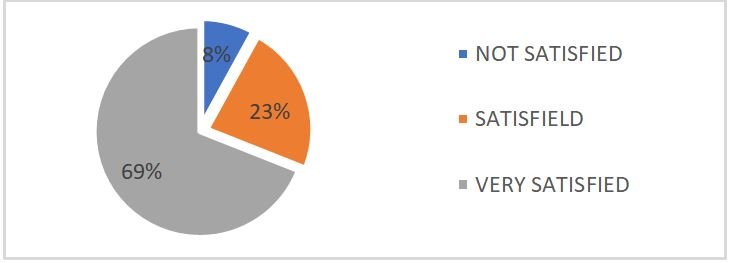
Figure 2: shows the outcome measures of intimacy using vacuum therapy following Radical Prostatectomy
How vital is product education?
Product education is a vital resource for patient understanding and most of all to improve product compliance (1). Studies have proven the use of a physical demonstration to improve Vacuum Erection Device efficacy from 40-60% up to 92% with similar improvements in 5 year compliance.
The main point to consider within a physical demonstration is customisation as we understand every patient is unique. Within the iMEDicare service we advise the options for the patients and advise the correct cylinder/ring sizing and type of pump dexterity dependent.
iMEDicare provide this clinical education service within a hospital setting run by product specialists. This entails a detailed tuition on device assembly / technique of usage both in a rehabilitative and intimacy context / safety limitations / device and components acquisition / trouble shooting service and on-going free technical support.
A recent study conducted by the Freeman hospital Urology department titled – ‘Erectile dysfunction after robotic radical prostatectomy: Real-life impact of vacuum erection device clinic’ (7). Discovered that following full tuition and support VED therapy is an effective treatment for men with post-RARP ED that is well tolerated with good short- to medium-term compliance. Up to two-thirds of men may find overall satisfaction with their post-RPED after VED therapy.
Figure 3 shows an accurate representation of patient compliance using vacuum therapy following attending an iMEDicare vacuum pump clinic.
Therefore, highlighting the importance of education and support to patients to ensure effective product outcomes.
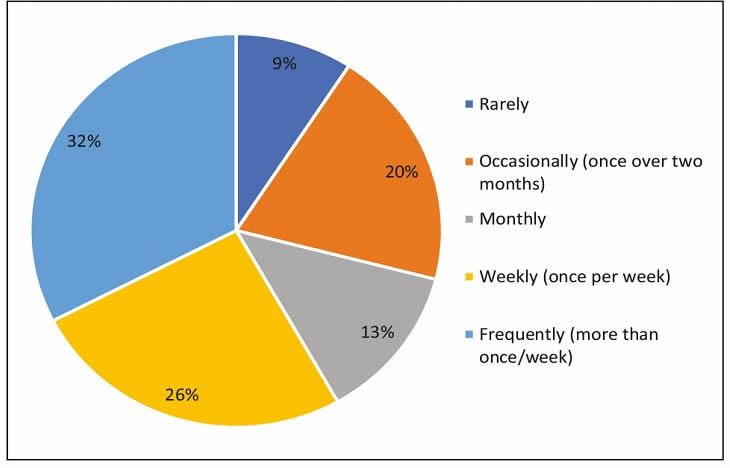
Figure 3: Pie chart illustrating frequency of VED usage reported by survey respondents (%).
Should education be offered for other devices?
Education and guidance are both a fundamental part of a patients understanding for improved outcomes. Therefore, iMEDicare believes all individuals utilising patient home use product options should be offered step by step tuition for medical devices.
For instance, how about the use of reusable options within the incontinence management arena? Not only much more economical for the environment but extremely cost effective.
Wagg et al (2009) pointed out that the use of containment products such as pads or collecting devices is increasing every year due to the inconsistent delivery of continence care and the increasing demands of an aging population. (10)
Conclusion
This article emphasizes the purpose of patient understanding to ensure product compliance. After all, the type of training, support, and follow-up given to patients taking up is fundamental to their overall performance.
Easy to use products with good IFU’s and support training should be considered in comparison to (or indeed alongside with) expensive single use pharmacological aids (8,9). Detailed, individualised Patient education cements their understanding of the use and purpose of their device, resulting in improved satisfaction, clinical and social outcomes and ultimately improved compliance.
References
- Mohiuddin, A. K. (2019). PATIENT EDUCATION: STEPS TOWARDS COMPLIANCE. Journal of Global Biosciences, 8(1), 5832-5846.
- Lewis RW, Witherington R. External vacuum therapy for erectile dysfunction: use and results. World J Urol 1997; 15: 78–82.
- Pahlajani, G., Raina, R., Jones, S., Ali, M. and Zippe, C., 2012. Vacuum erection devices revisited: its emerging role in the treatment of erectile dysfunction and early penile rehabilitation following prostate cancer therapy. The journal of sexual medicine, 9(4), pp.1182-1189.
- Raina, R., Agarwal, A., Ausmundson, S., Lakin, M., Nandipati, K. C., Montague, D. K., ... & Zippe, C. D. (2006). Early use of vacuum constriction device following radical prostatectomy facilitates early sexual activity and potentially earlier return of erectile function. International journal of impotence research, 18(1), 77-81.
- Madani, A., Watanabe, Y., Vassiliou, M.C., Fuchshuber, P., Jones, D.B., Schwaitzberg, S.D., Fried, G.M. and Feldman, L.S., 2016. Long-term knowledge retention following simulation-based training for electrosurgical safety: 1-year follow-up of a randomized controlled trial. Surgical endoscopy, 30(3), pp.1156-1163.
- Hackett G et al. British Society for Sexual Medicine Guidelines on the Management of Erectile Dysfunction in Men – 2017. J Sex Med 2018;15:4305-7. Levine LA et al. Vacuum constriction and external erection devices in erectile dysfunction. Urol Clin North Am 2001;28:335-41.
- Jones, P., Sandoval Barba, H., Johnson, M. I., Soomro, N., Robson, W., Ferguson, J., & Aning, J. J. (2020). Erectile dysfunction after robotic radical prostatectomy: Real-life impact of vacuum erection device clinic. Journal of Clinical Urology, 2051415820946630.
- Phillips B, Zhao H. Predictors of assistive technology abandonment. Assist Technol 1993;5(1):36-45
- McMillen A-M, Soderberg S. Disabled persons’ experience of dependence on assistive devices. Scandinavian Journal of Occupational Therapy 2002;(9):176-83.
- Wagg A, Harari D, Husk J, et al (2010) The National Audit of Continence Care for Older People. Available at: www.rcplondon. ac.uk/projects/national-continence-audit- reports (accessed 11 February, 2015)
Content provided by iMEDicare.
For more information please visit www.mypelvichealth.co.uk.


