
 Context
In developed countries such as the UK, it has been estimated that we spend around 85-90% of our time indoors, including in our homes, at work and commuting between the two. However, with the exception of occupational exposures, regulation around air pollution exposure focuses almost entirely on outdoor air pollution. If we want to fully understand our exposure to air pollution and then make sound suggestions on how to reduce it, we need to consider indoor air pollution as well as that from outdoors.
Indoor air pollution
Some of the pollution we are exposed to indoors comes from outdoors, for instance through open windows and doors. If a residence or workplace is on a busy road, the traffic could be a major source of indoor air pollutants. Indoor sources include activites such as cooking, fuel burning on open fires or inefficient/poorly-maintained stoves, cleaning, DIY activities, smoking and use of persnoal care products and air fresheners.
There are also sources of pollution from furnishings and building materials, as well as bio-effluents (e.g. carbon dioxide) from people. Finally, chemical and physical interactions between pollutants and building surfaces can make further pollutants. The indoor air quality in a building will therefore depend on its location, how it is ventilated (natural or mechanical) and what activities are going on inside it.
The drive to increase energy efficiency through increased insulation in recent years, has led to increasingly airtight buildings and species emitted indoors take longer to be diluted and removed. It is vital that indoor sources are considered as well as those outdoors when trying to understand the overall exposure (and consequent health effects) of an individual. Otherwise, by trying to avoid one source of pollution, you may inadvertently expose an individual to higher pollutant concentrations.
An obvious example might be shutting the windows of a residence to avoid traffic exhaust from cars outside, but then being exposed to undiluted cigarette smoke being generated by a smoker indoors. Smoking is well known to cause adverse health effects, but some of the activities mentioned above can also generate harmful pollutants. For instance, cleaning and cooking can lead to the production of particulate matter and the use of fragranced products can produce formaldehyde, both of which are associated with adverse health effects.
Relevance for the NHS
There are two main issues for the NHS when it comes to indoor air pollution. The first is around those presenting with conditions that are exacerbated by exposure to air pollution. In this case, a health care specialist might reasonably suggest that the individual avoids exposure to polluted areas such as adjacent to busy roads, or avoids exercise outdoors when outdoor pollution is high. This would only be good advice if the indoor environments used by that individual are known to be free of sources of pollution that also worsen their condition. Adverse health outcomes have been shown to increase as ventilation decreases, so shutting the window is not always a good solution without understanding all of the sources an individual is exposed to.
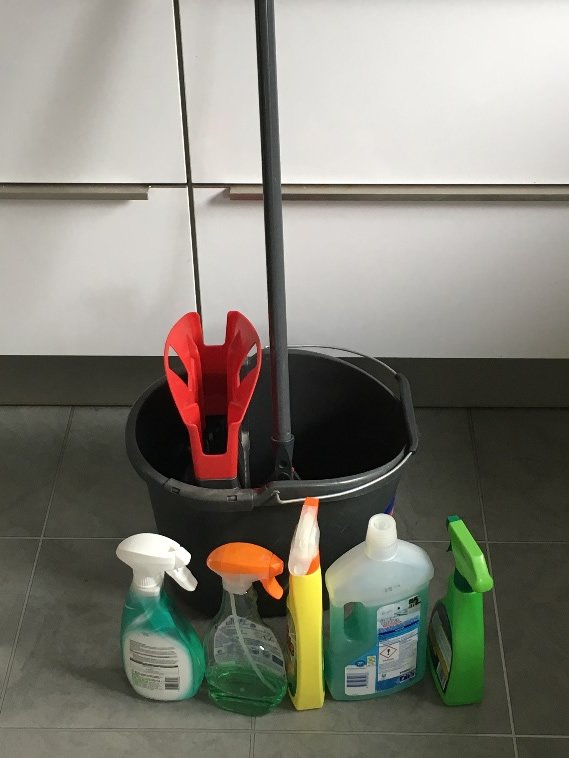
The second issue is around the healthcare environments themselves. An obvious step would be to avoid fragranced products (e.g. cleaning products) in these settings, and also, thinking about the time of day when cleaning is carried out. Indoor chemistry (and hence the processes that drive production of harmful secondary products) tends to be driven by outdoor ozone, which is higher in the afternoons, especially in summer. Cleaning in the morning could therefore lead to lower concentrations of some pollutants indoors than if cleaning were carried out in the afternoon. The appropriateness of some of the air cleaning devices that are marketed to remove bio-pathogens should also be considered. Whilst some of these may be effective, others are less so and some use chemical reactions internally that can cause harmful products to be emitted upon use. As these devices are largely unregulated at the moment, it is important to understand the full impacts of any instrument used in a healthcare setting, both chemically and biologically.
What can be done?
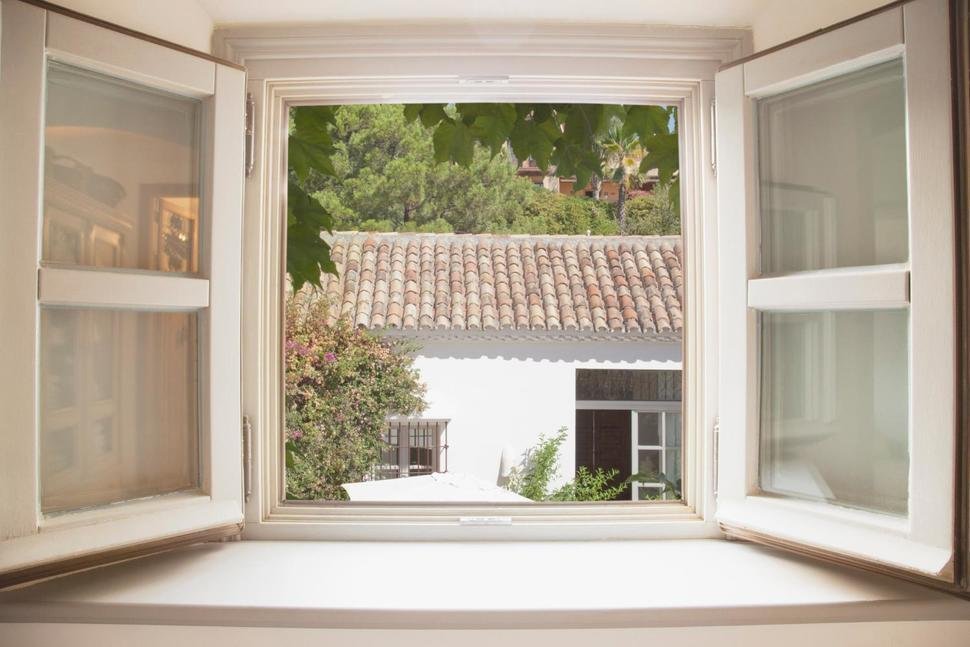
There are several things that can be done to lower exposure to indoor pollutants in any setting. Avoid unnecessary personal care product use, use cream products instead of spray products and use a cooker hood (that ventilates outdoors) while cooking. Ventilate regularly with outdoor air if it is relatively clean: if you live near a road, use a window on the other side of the building. In summer, if outdoor ozone is high and windows are open to keep a building cool, consider avoiding cleaning activities until outdoor ozone is lower.
Further Reading
The US-EPA site on indoor air quality provides some excellent background information on indoor air quality www.epa.gov/indoor-air-quality-iaq
Read about the WHO air quality guidelines for indoor air pollutants: www.euro.who.int/en/health-topics/environment-and-health/air-quality/publications/2010/who-guidelines-for-indoor-air-quality-selected-pollutants
This paper reviews indoor chemistry: Weschler CJ, Carslaw N (2018) Indoor Chemistry. Environmental Science and Technology 52: 2419–2428. doi: 10.1021/acs.est.7b06387
And this one presents a review of data around adverse health effects and lower ventilation rates: Sundell, J., Levin, H., Nazaroff, W.W., Cain, W.S., Fisk, W.J., Grimsrud, D.T., Gyntelberg, F., Li, Y., Persily, A.K., Pickering, A.C., Samet, J.M., Spengler, J.D., Taylor, S.T. and Weschler, C.J. (2011) Ventilation rates and health: multidisciplinary review of the scientific literature, Indoor Air, 21, 191-204.
Content provided by Professor Nicola Carslaw, University of York. For more information please email nicola.carslaw@york.ac.uk.