
The National Overprescribing Review estimates that 10% of medicines prescribed in primary care are unnecessary or harmful(1). The review concludes that overprescribing is caused by systemic and cultural factors. Failure to embed deprescribing into the prescribing process is a significant contributor to overprescribing. The principles of Good Prescribing Practice (Figure 1) require prescribers to monitor the appropriateness of the medicines they prescribe and proactively deprescribe any that become inappropriate before they cause harm. Despite this, deprescribing in both primary and secondary care is largely ‘reactive’ in response to an adverse drug event such as a side effect(2,3). Practitioner motivation to reactively deprescribe is likely to be very high given that inaction leads to certain patient harm. For example, reactively deprescribing an anticoagulant for a patient presenting with a gastric bleed. Proactive deprescribing, however, requires a complex weighing of future potential harm versus benefit(3). Uncertainties regarding the likely benefits and potential harms is a barrier to proactive deprescribing(4). For example, a practitioner may be reticent to proactively deprescribe an antihypertensive for a patient even if the risk of falling and resulting fracture is greater than the risk of a cardiovascular event.
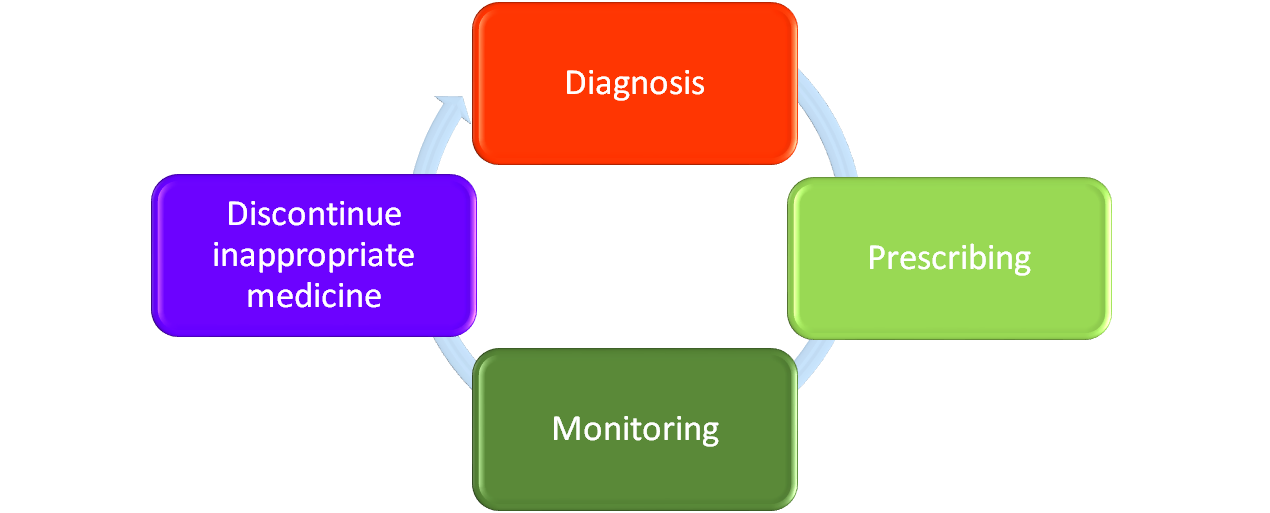
Figure 1 Principles of Good Prescribing Practice (5)
One strategy proposed for identifying and resolving overprescribing is the introduction of Structured Medication Reviews. These are a review of all medicines that a patient is using to assess them for safety, effectiveness and tailored to the patient’s needs. Structured Medication Reviews are intended to ‘take considerably longer than an average GP appointment’ and be primarily undertaken by prescribing pharmacists thus introducing extra resource for increasing deprescribing activity in primary care.
Stakeholder engagement is essential for achieving behaviour change, however, purely focussing on what people think they need to deliver the change, often fails to address all barriers and enablers(6). Staff commonly cite the need for extra resource as the solution. However, given extra resource such as time and workforce, staff will often increase existing activities with which they are familiar and have a known pathway of recognition rather than undertake the desired new behaviour. Another commonly delivered ‘solution’ to effect a change in practice is education and training. Whilst having the required knowledge and skills is clearly essential, behaviour change is rarely achieved by addressing only these barriers/enablers (6).
Asking staff what help they think they need, places the onus on them to correctly identify their barriers and enablers to undertaking the desired behaviour and then select the most appropriate solutions. The field of behavioural science has offered a scientific approach to garner meaningful input from stakeholders to shape the development of strategies to support implementation of a new behaviour(7). Stakeholders’ thoughts and concerns regarding the required change in practice can be analysed to identify and prioritise the key barriers/enablers to implementing a new behaviour(8). For each key barrier/enabler, a range of theory and evidence based solutions have been collated into a taxonomy(9). Stakeholders can then be facilitated to select solutions from the taxonomy according to criteria such as the extent to which it is likely to be acceptable to everyone, affordable for the organisation and not introduce inequity(10).
Applying behavioural science to address the determinants of opioid deprescribing in primary care has identified six key components needed to support prescribers(11). Figure 2 provides these six components that are yet to be included in all primary care strategies.
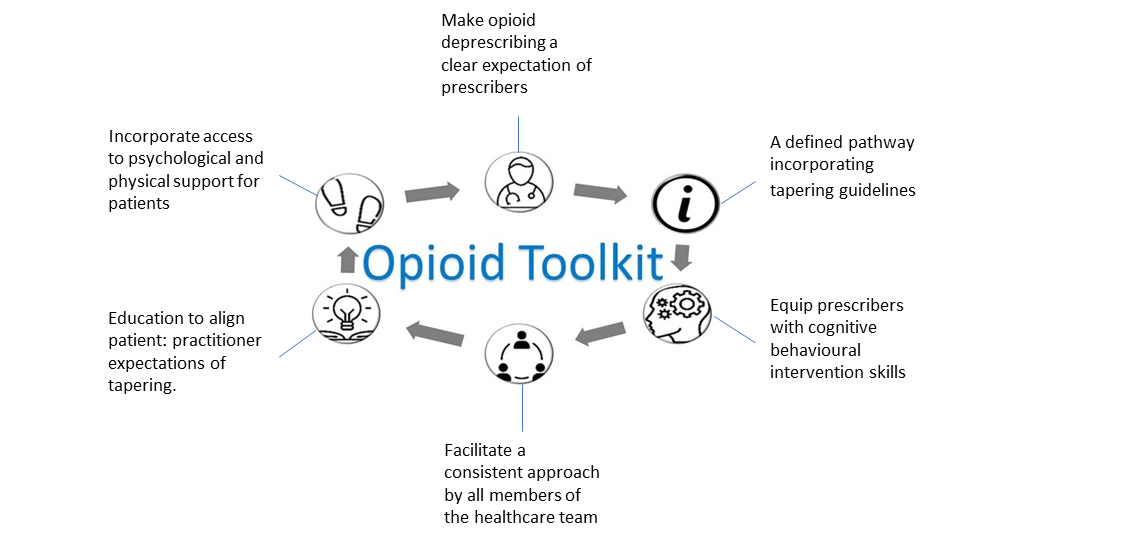
Figure 2 Opioid toolkit
Whilst there is likely to be some overlap between the determinants of opioid deprescribing and proactive deprescribing in the primary care context, they are not the same behaviour. For example, patient reluctance to have their opioids deprescribed is addressed in the toolkit through education to modify unrealistic patient expectations of pain management and opioid tapering(11). In contrast, patients expect prescribers to proactively deprescribe(12). However, stakeholder engagement with prescribers identified that a barrier to them proactively deprescribing is the belief that patients are resistant(13). Accordingly, the component to address this barrier should target the practitioners’ misconception.
The determinants of proactive deprescribing in the hospital context have been fully characterised and an intervention co-designed by a team comprising experts in behavioural science working with patients, geriatricians and pharmacists(10). The National Institute for Health Research funded CHARMER (CompreHensive geriAtRician-led MEdication Review) study will evaluate the intervention across up to 42 NHS hospitals. This will provide the evidence for the safety, effectiveness and cost-effectiveness of proactive deprescribing which is essential to underpin commissioning decisions. Differences between the primary and secondary care contexts are likely to yield different determinants and therefore the CHARMER intervention is unlikely to be suitable for implementation in primary care. The CHARMER research programme, however, provides a blueprint for primary care teams to work with experts in behavioural science to implement the National Overprescribing Review recommendations and evaluate any resulting interventions for their safety, effectiveness and cost per quality adjusted life year as there are no pre-existing trials delivering data on all three aspects.
References
- Good for you, good for us, good for everybody: A plan to reduce overprescribing to make patient care better and safer, support the NHS, and reduce carbon emissions [Internet]. Department of Health and Social Care; 2021 [cited 2021 Dec 21]. Available from: https://assets.publishing.service.gov.uk/government/uploads/system/uploads/attachment_data/file/1019475/good-for-you-good-for-us-good-for-everybody.pdf
- Anderson K, Foster M, Freeman C, Luetsch K, Scott I. Negotiating “unmeasurable harm and benefit”: perspectives of general practitioners and consultant pharmacists on deprescribing in the primary care setting. Qualitative health research. 2017;27(13):1936–47.
- Scott S, Clark A, Farrow C, May H, Patel M, Twigg MJ, et al. Deprescribing admission medication at a UK teaching hospital; a report on quantity and nature of activity. International journal of clinical pharmacy. 2018;40(5):991–6.
- Scott S, Wright DJ, Bhattacharya D. The role of behavioural science in changing deprescribing practice. Br J Clin Pharmacol. 2021 Jan;87(1):39–41.
- General Medical Council. Good practice in prescribing and managing medicines and devices [Internet]. 2021 [cited 2021 Dec 16]. Available from: https://www.gmc-uk.org/-/media/documents/prescribing-guidance-updated-english-20210405_pdf-85260533.pdf
- Kelly MP, Barker M. Why is changing health-related behaviour so difficult? Public health. 2016;136:109–16.
- Skivington K, Matthews L, Simpson SA, Craig P, Baird J, Blazeby JM, et al. A new framework for developing and evaluating complex interventions: update of Medical Research Council guidance. bmj. 2021;374.
- Scott S, Twigg MJ, Clark A, Farrow C, May H, Patel M, et al. Development of a hospital deprescribing implementation framework: a focus group study with geriatricians and pharmacists. Age and ageing. 2020;49(1):102–10.
- Johnston M, Carey RN, Connell Bohlen LE, Johnston DW, Rothman AJ, de Bruin M, et al. Development of an online tool for linking behavior change techniques and mechanisms of action based on triangulation of findings from literature synthesis and expert consensus. Translational behavioral medicine. 2021;11(5):1049–65.
- Scott S, May H, Patel M, Wright DJ, Bhattacharya D. A practitioner behaviour change intervention for deprescribing in the hospital setting. Age and ageing. 2021;50(2):581–6.
- Bhattacharya D. Reducing opioid use for chronic non-cancer pain in primary care. Prescriber. 2021;32(5):28–31.
- Scott S, Clark A, Farrow C, May H, Patel M, Twigg MJ, et al. Attitudinal predictors of older peoples’ and caregivers’ desire to deprescribe in hospital. BMC geriatrics. 2019;19(1):1–11.
- Anderson K, Stowasser D, Freeman C, Scott I. Prescriber barriers and enablers to minimising potentially inappropriate medications in adults: a systematic review and thematic synthesis. BMJ open. 2014;4(12):e006544.
Content provided by Sion Scott Lecturer in Behavioural Medicine, University of Leicester & Debi Bhattacharya Professor of Behavioural Medicine, University of Leicester